Chopsticks, a simple but ingenious eating tool, have a rich history and deep cultural significance in many East Asian societies. Their evolution from primitive utensils to an essential part of daily life is a fascinating journey through time and culture. This blog explores the cultural influences of chopsticks.
Chopsticks are more than just eating utensils; they have an important cultural significance in many societies. Let's start with the chopsticks themselves. One end of the chopstick is round, the other is square. The round end symbolises the sky, the square end the earth, which corresponds to the concept of "round sky and square earth". This reflects the Chinese understanding of the basic principles of the world.
When holding the chopsticks, the thumb and index finger are on top, the ring finger and little finger are on the bottom and the middle finger is in between. This stands for the "three talents" of heaven, earth and humanity and symbolises the Chinese understanding of the relationship between man and the world. In China, the use of chopsticks is closely linked to Confucian etiquette. The correct use of chopsticks reflects one's upbringing and respect for others at the dining table.
During the Sui and Tang dynasties, chopsticks made of gold and silver were introduced, but were only available to high-ranking officials and the wealthy. Copper chopsticks fell out of favour as they tended to oxidise and develop a bad taste, while iron chopsticks were unsuitable for eating as they rusted easily. As a result, silver chopsticks became popular as they were believed to detect poison by turning black in its presence. Although this belief was unscientific, it made silver chopsticks very popular.
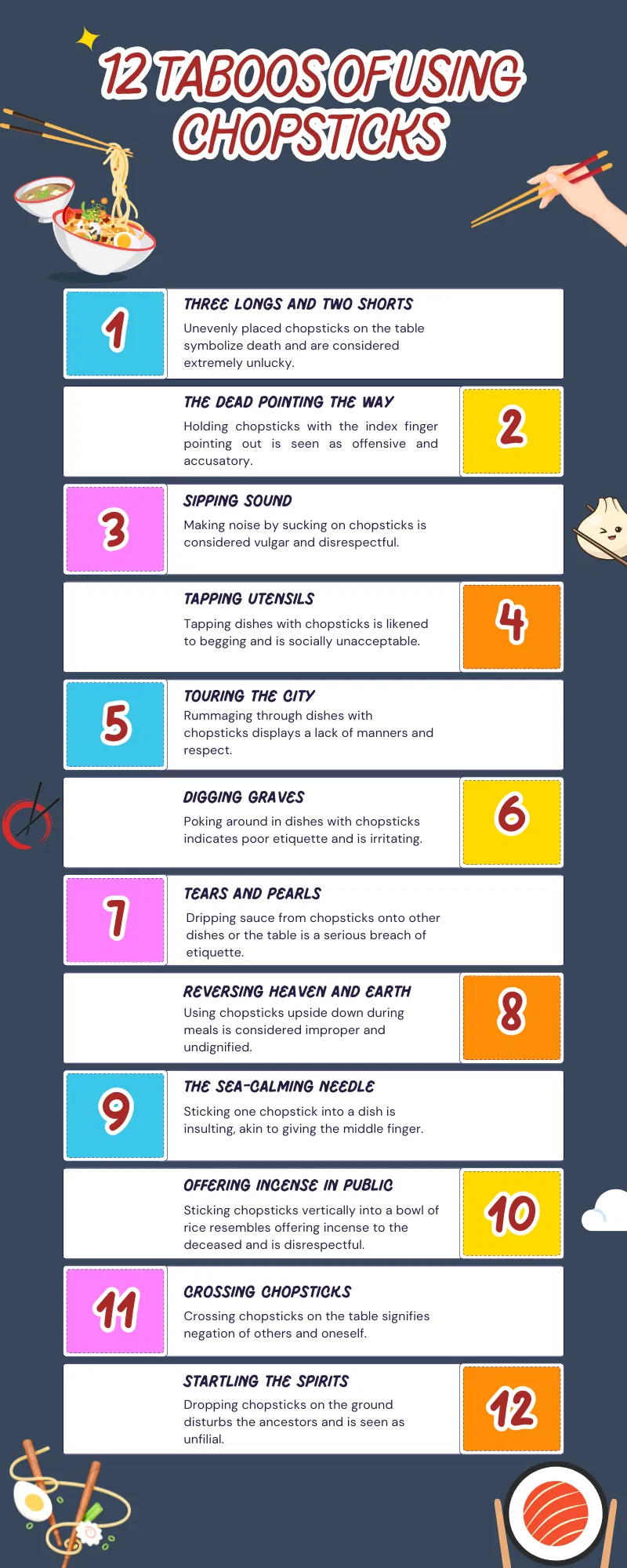
These taboos emphasise the deep cultural significance of chopsticks and serve as a tool for teaching etiquette.